



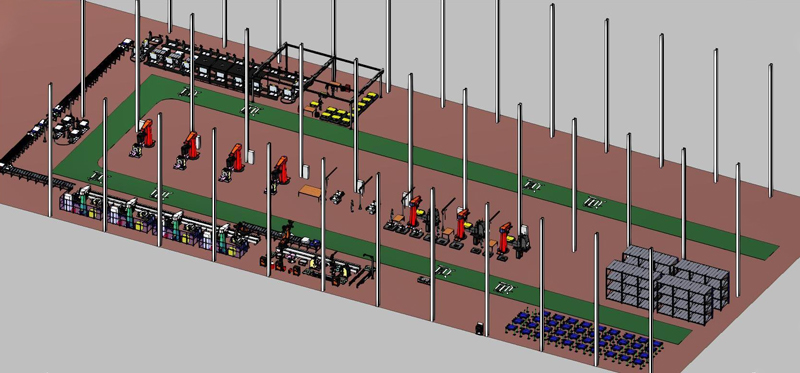
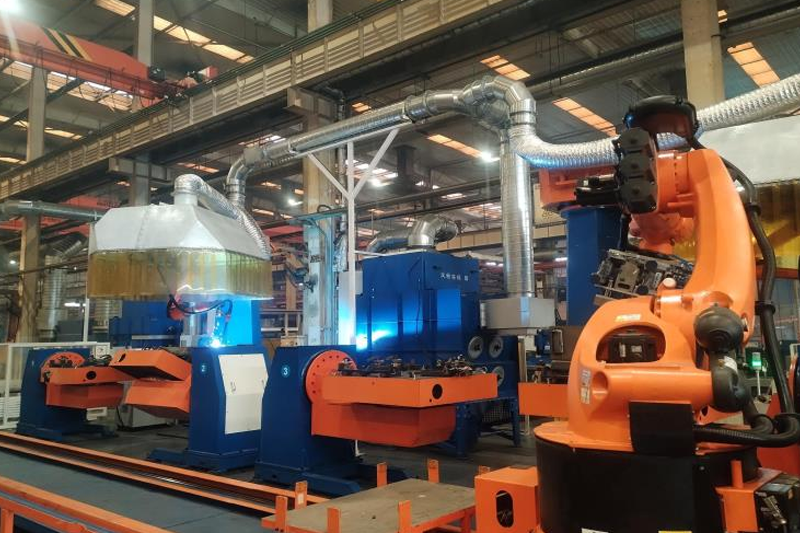
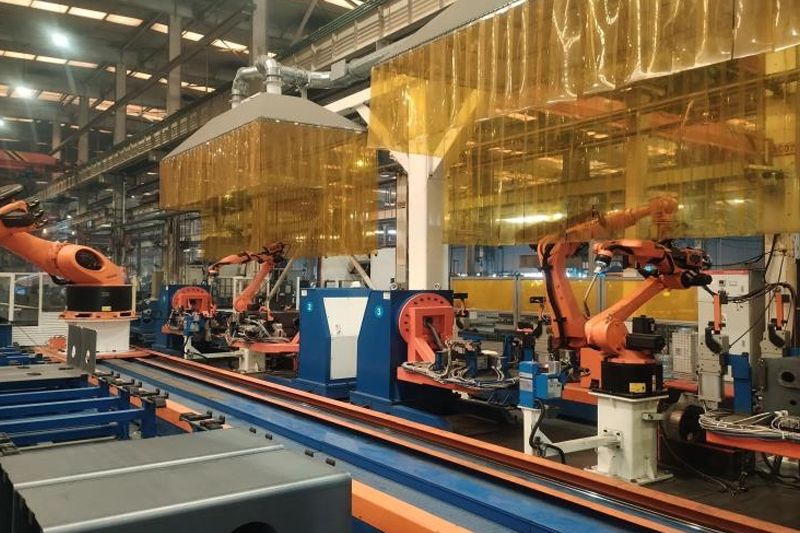
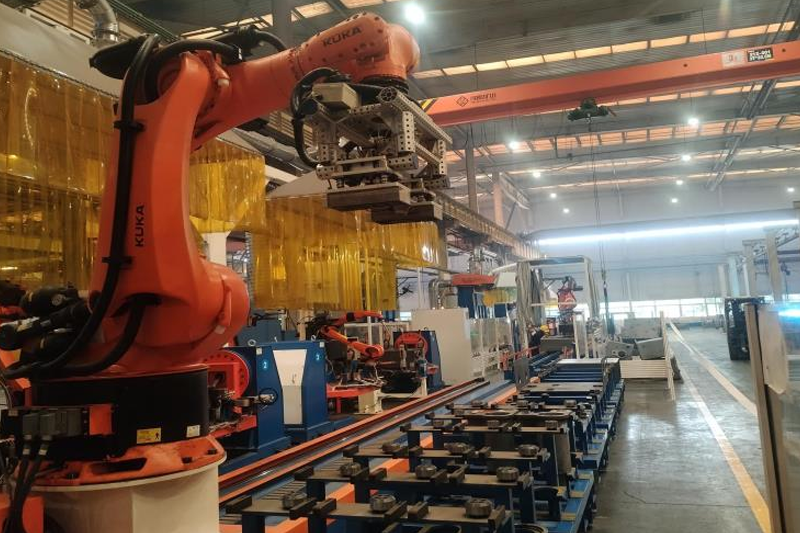


The role of non-standard automated welding production line
Improving production efficiency: The non-standard automated welding production line integrates multiple welding robots to achieve simultaneous welding of different welds, significantly improving production capacity, shortening product production cycles, and accelerating product updates.
Reduce labor intensity: Automated welding equipment can replace manual welding work, reducing heavy and repetitive labor for workers, avoiding the impact of harsh working environments on workers, and reducing production labor intensity.
Save material costs: Through precise welding control, defects such as weld leakage, weld bead, and weld spatter are reduced, improving the quality of the weld bead, thereby reducing raw material waste and lowering production costs.
Improving product quality: Automated welding production lines can achieve high-precision welding, ensuring the appearance and flatness of welded parts, improving the welding quality of products, and enhancing their market competitiveness.
Space saving: The compact layout and three-dimensional operation mode of automated welding equipment reduce the footprint and save infrastructure investment.
The application fields of non-standard automated welding production lines are very extensive, mainly including automobile manufacturing, machinery manufacturing, electronics industry, large tank body, container industry, shipbuilding, steel structure, coal mining equipment and other fields. These fields have achieved automation and intelligent welding by customizing non-standard automated welding production lines, improving production efficiency and product quality.
The difference between non-standard automated production lines and standard automated production lines is that they have a higher degree of customization, can be designed and manufactured according to specific customer needs, and have greater flexibility. Non standard automated production lines are usually used in production scenarios with special process requirements, while standard automated production lines are suitable for large-scale, standardized production needs.


